What Each Platform Was Actually Built For
Squarespace: design first, commerce added later
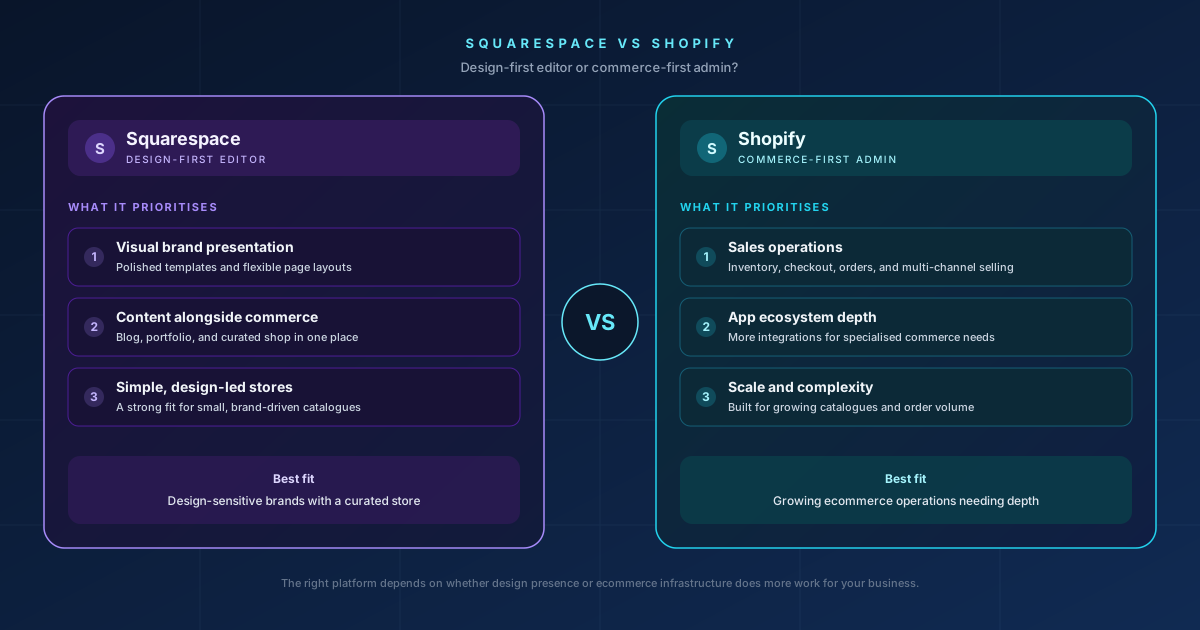
Squarespace started as a website and portfolio builder, and its ecommerce features were added on top of that design-first foundation. This shows in the result: Squarespace templates are consistently some of the most polished and visually cohesive in the industry, genuinely strong for a brand that wants to look premium without hiring a designer.
Squarespace's own comparison page.
Shopify: commerce first, design flexible around it
Shopify was built from day one as a dedicated ecommerce platform. Every part of its architecture, checkout, inventory, order management, is built around selling, with design flexibility layered on through themes and apps rather than being the platform's original purpose.
Where Squarespace Wins
Design quality out of the box
If your business is genuinely design-sensitive, a photography studio, a boutique brand, a portfolio-driven service, Squarespace's templates require less design work to look professional than most Shopify themes do out of the box.
Content and commerce in one place
Squarespace treats blogging, portfolio pages, and product pages as equally native parts of the same system, which suits a business where the website itself is as important as the store, not just a storefront bolted onto a separate marketing site.
Where Shopify Wins
Ecommerce-specific features
Shopify's inventory management, abandoned cart recovery, multi-channel selling, and checkout customisation are all considerably more developed than Squarespace's equivalent features, because commerce is what the platform was built around from the start.
App ecosystem scale
Shopify's app marketplace is dramatically larger than Squarespace's, which matters the moment your store needs a specific integration, a particular shipping calculator, a loyalty program, a subscription billing tool, there's a meaningfully higher chance Shopify's ecosystem already has it built.
Zapier's independent comparison.
Scaling headroom
As a catalogue grows past a few dozen products, or as order volume grows into the hundreds per day, Shopify's infrastructure is built to handle that scale more comfortably than Squarespace's commerce layer, which was designed for smaller, design-led stores rather than high-volume operations.
Working on a Squarespace and Shopify platform assessment project?
Written scope before billing. $30/hr. We tell you if we're not the right fit.
The Real Decision Factor: What's Your Business Actually Selling?
If you're selling a small number of high-margin, brand-driven products, art prints, coaching packages, a curated boutique line, where the site's look is doing real selling work itself, Squarespace's design strength often matters more than Shopify's deeper commerce features. If you're running a genuine ecommerce operation, dozens or hundreds of SKUs, real order volume, a need for specific integrations, Shopify's infrastructure earns its complexity.
Neither answer is universal, and we'd rather tell you honestly which platform fits your actual catalogue and growth plans than default to whichever platform we happen to have more current capacity to build on.
The Reality of Migrating Between Them
Moving a store from Squarespace to Shopify, or the reverse, means carefully handling product data, customer records, and order history, plus setting up redirects so you don't lose existing search rankings through the move. This is genuinely more involved than most business owners expect going in, and it's one of the most common reasons a migration ends up needing a developer rather than a DIY export/import.
Where We Fit
If you're comfortable evaluating your own catalogue size and design priorities and choosing based on that, this decision doesn't require us. Where we come in is for businesses that want an honest technical assessment of which platform actually fits their specific situation, or for migrations between the two that need careful data handling and SEO preservation.
That's the same work behind our dedicated Squarespace development practice and Shopify development practice, $30 an hour, written scope before any billing starts.

Akash Singh
View full profileCTO and Co-Founder, CV Infotech · Gurugram, India
Akash has been building Websites, Web Apps, SaaS and Mobile Apps for clients in the USA, Europe, Australia, and Canada since 2012. He leads a 100% in-house team and personally manages every client relationship and technical decision. Francisco Escobar has worked with him since 2012. Steven has trusted the team with his AI platforms since 2019. 512 verified 5.0 reviews on Freelancer.com.