E-commerce Improvements · SaaS & Integrations · Release Reliability. Discuss Your Improvement →
For teams with a defined call journey

AI Voice Agent Development Services

Build a voice agent around the calls your team handles.

CV Infotech scopes and develops AI voice agents for inbound enquiries, appointment requests and structured call intake. Define permitted actions, connected systems and the route to human help, then test a focused pilot before wider use.

Start with one call type, your phone provider and the outcome the caller needs.

Selected work · UltimaBot
UltimaBot public AI communication-platform website
UltimaBot

CV Infotech developed UltimaBot, an AI communication platform bringing website chatbots, email campaigns and voice agents into shared lead-management workflows.

Relevant published work

Voice within a broader communication product

Public project reference

CV Infotech developed UltimaBot, an AI communication platform whose public offering includes inbound and outbound voice agents alongside website chatbots and email workflows.

Explore UltimaBot →
UltimaBot→
AI COMMUNICATION SOFTWARE
SELECTED PRODUCT WORK

Chat. Email. Voice.
Shared context.

A communication product connecting website conversations, email campaigns and voice agents.

OUR ROLEProduct development by CV Infotech
PRODUCT IN FOCUS
ultimabot.ai · Public product preview→
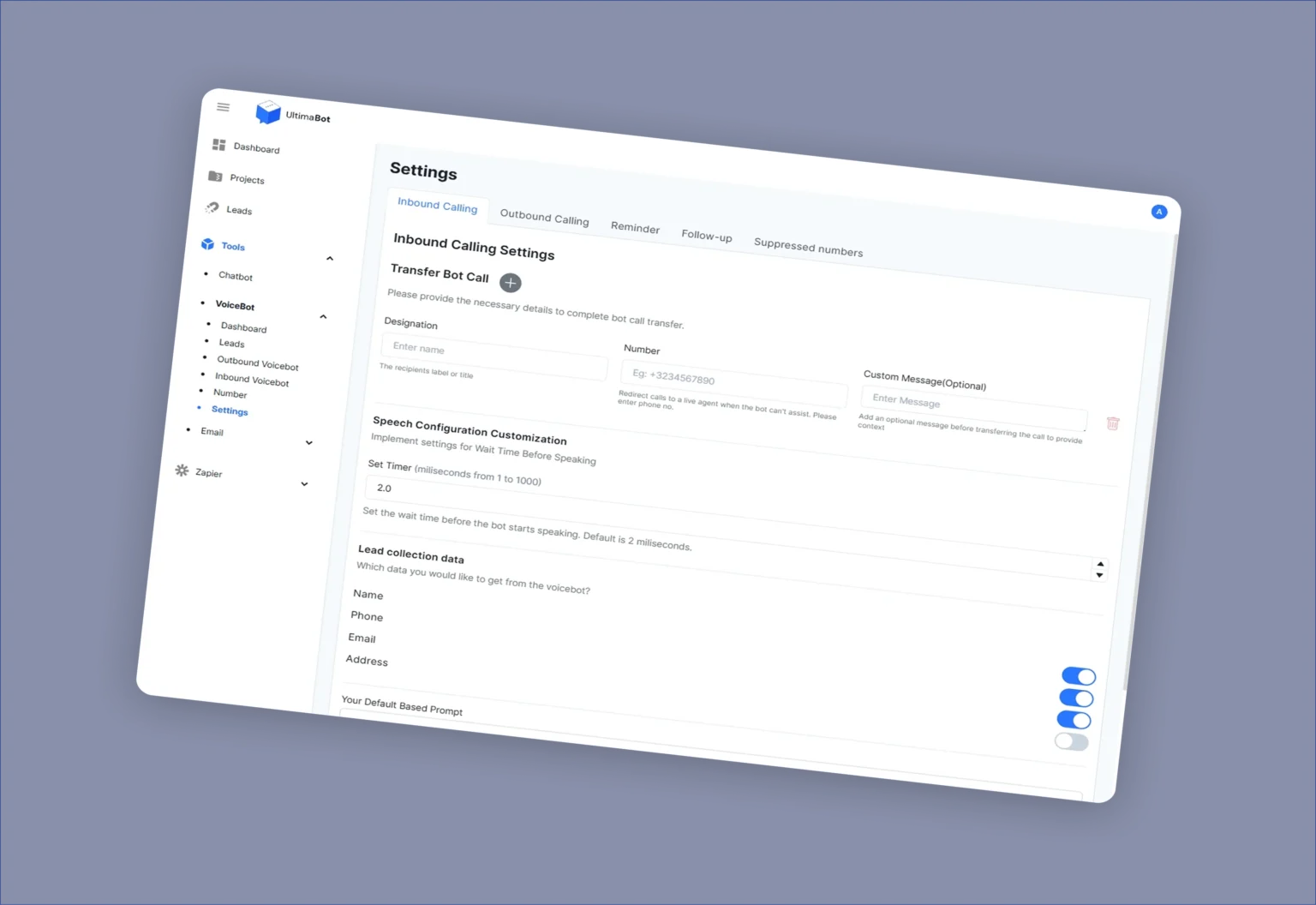
Actual UltimaBot inbound calling settings interface from its public website
Voice setup · Real product detail
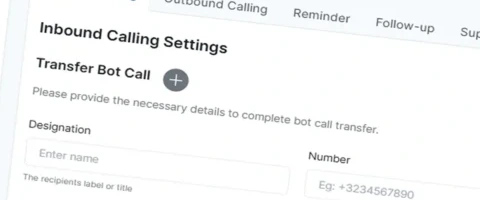
Actual UltimaBot call-transfer configuration detail
∿
FEATURE SPOTLIGHTVoice agent setup
Voice settings and lead collection
Product capabilities

Converse

Website chatbots and voice agents

Connect

Inbound and outbound workflows

Continue

Shared knowledge and lead management

The agreed scope

Define the outcome of an AI-assisted call

For an inbound enquiry, success might mean capturing a caller's request, confirming the details and recording a follow-up task. For appointment requests, it might mean checking eligible availability and confirming a booking only after the scheduling system accepts it.

Define the boundaries just as carefully. Which questions can the agent answer? What information must it avoid collecting? When should it stop trying, offer an approved alternative or route the request for human review? Your team needs a practical outcome even when the automated conversation cannot finish the task.

Start with one high-value call type and a representative set of examples. A focused pilot provides a clearer way to judge suitability than a promise to automate every conversation.

Trace the outcome of an inbound call

A spoken confirmation should reflect what the connected system actually accepted.

  1. 01Greet and establish purpose

    Use the agreed disclosure and identify an eligible request without collecting unnecessary information.

  2. 02Clarify and confirm

    Handle unclear speech, interruptions and missing details before a permitted action is attempted.

  3. 03Attempt the authorised step

    Validate details and ask the connected system to carry out only the agreed action.

  4. 04Confirm or offer fallback

    Report the actual result; use a tested transfer, callback or other approved route when the task cannot finish.

Illustrative workflow for scoping. The final stages and responsibilities depend on your project.

An example inbound call journey

Add an exception route at each relevant stage. Speech may be unclear, the caller may interrupt, a booking may no longer be available or the connected system may fail. Define whether the agent should clarify, capture a callback request, attempt an available transfer or end the call with an explanation. Transfer availability and failure handling depend on the chosen setup.

The agreed scope

AI voice-agent development: call flow, speech and actions

Telephony and call lifecycle

Review your current phone provider, number requirements, supported destinations and expected call volume. Define inbound routing, operating hours, concurrent-call needs and what happens when capacity is unavailable. If outbound calling is proposed, consent, contact eligibility and applicable calling restrictions need separate review before activation.

Conversation and speech behaviour

Design the opening, questions, confirmation steps and stopping conditions around the call's purpose. Test interruptions, silence, repeated questions, names, numbers and poor audio. Specify the languages and accents that matter to your callers, then evaluate representative recordings with permission or suitable test material. Language support should be accepted through testing for the selected configuration.

Business actions and reliable outcomes

Scope exactly which actions the agent may attempt, such as creating a callback request or requesting an appointment. Define required fields, validation and the system that owns the result. A spoken assurance must match the actual system response. Test timeouts, repeated requests and rejected updates so a caller is not told that an unsuccessful action has completed.

Review, records and operation

Agree what call metadata, transcripts or recordings are needed, who can access them and how long they should be retained. Recording and disclosure requirements depend on the deployment and need appropriate review. Design outcome categories and error visibility so the operating team can identify incomplete work without relying on the conversation alone.

Plan your project

Choose a suitable voice-agent use case

This service is suited to teams with a repeatable call journey, an accountable process owner and a way to evaluate the result. Useful starting briefs include structured enquiry intake, appointment-request handling and routing callers to the appropriate next step.

An automated agent may be unsuitable where the call requires sensitive judgement, emergency handling or decisions that your organisation requires a qualified person to make. If the requirement is a website messaging assistant, explore AI chatbot development. A wider AI initiative belongs with AI development services.

Plan your project

Test a voice-agent pilot before wider deployment

1. Agree the call contract. Document eligible calls, permitted actions, information sources, handoff options and conditions that require stopping.

2. Validate the configuration. Check telephony coverage, provider capabilities, language requirements, system access and expected usage costs.

3. Test a representative pilot. Evaluate task completion, incorrect confirmations, response delays and exception handling against agreed criteria. Include difficult calls and failed dependencies.

4. Set a controlled rollout. Agree who approves launch, which calls are included, how failures are reviewed and when the workflow should be paused or changed.

A scoped engagement can deliver a call-flow specification, configured pilot, agreed system connections, test cases, evaluation findings and an operating guide. Production rollout, support coverage, provider usage and further call types should be explicit in the proposal.

Explore your starting point

Choose the call outcome to test first

A narrow call type makes the permissions and fallback easier to evaluate.

What should the voice agent do?

Capture an enquiry or callback request

Focus the pilot on correct details, caller confirmation and a visible follow-up record.

  • Agree required fields and permitted topics
  • Test names, numbers, interruption and silence
  • Confirm where requests appear and who follows up
Request an appointment

Treat availability and booking confirmation as separate steps. A failed action must not sound like a completed booking.

  • Check scheduling access and business rules
  • Confirm details before the permitted booking action
  • Test no availability, duplicate attempts and timeouts
Route a caller to a person

Transfer feasibility depends on the phone setup, staff availability and the fallback when the transfer does not connect.

  • Verify the provider’s routing capabilities
  • Define hours, destinations and transfer conditions
  • Test unanswered transfers and the approved alternative

Illustrative scoping guide. Each choice reveals a fixed checklist; it does not inspect your systems, calculate a score or estimate a quote.

Before you start

AI voice agent development questions

Can we keep our current telephone number?

That depends on your provider, number type and available routing or porting options. Share your provider and intended countries first. Confirm feasibility and any service interruption risk before changing a live number.

Can the agent transfer a call to a person?

A transfer path can be assessed for the selected telephony setup. Define who receives it, when they are available and what happens if the transfer fails or nobody answers. Do not assume every configuration supports an immediate human handoff.

Which languages will work?

Name the languages, accents and terminology your callers actually use. Speech recognition, generation and telephony performance vary by configuration. Language coverage needs a representative acceptance test; a provider's language list alone is insufficient.

What does an AI voice agent cost to build and run?

Estimate build scope separately from recurring telephony, model, speech and hosting costs. Call duration, concurrency, routing and evaluation requirements affect the budget. Agree which measures matter for your workflow rather than relying on a generic savings claim.

Can we start with a small pilot?

A bounded pilot is a sensible option when feasibility is uncertain. Choose one call type, define its allowed actions and agree pass, revise or stop criteria before testing. Set the decision about a wider rollout after reviewing the evidence.

Start with a focused conversation

Bring us one call you want to improve

Tell us the purpose of the call, whether it is inbound or outbound, your phone provider, required countries and languages, and the system that should receive the outcome. Include approximate call volume, your budget range and target date.

Describe a fictional call. Please do not attach real recordings, personal caller information or credentials to the initial enquiry.

Map my voice-agent workflow