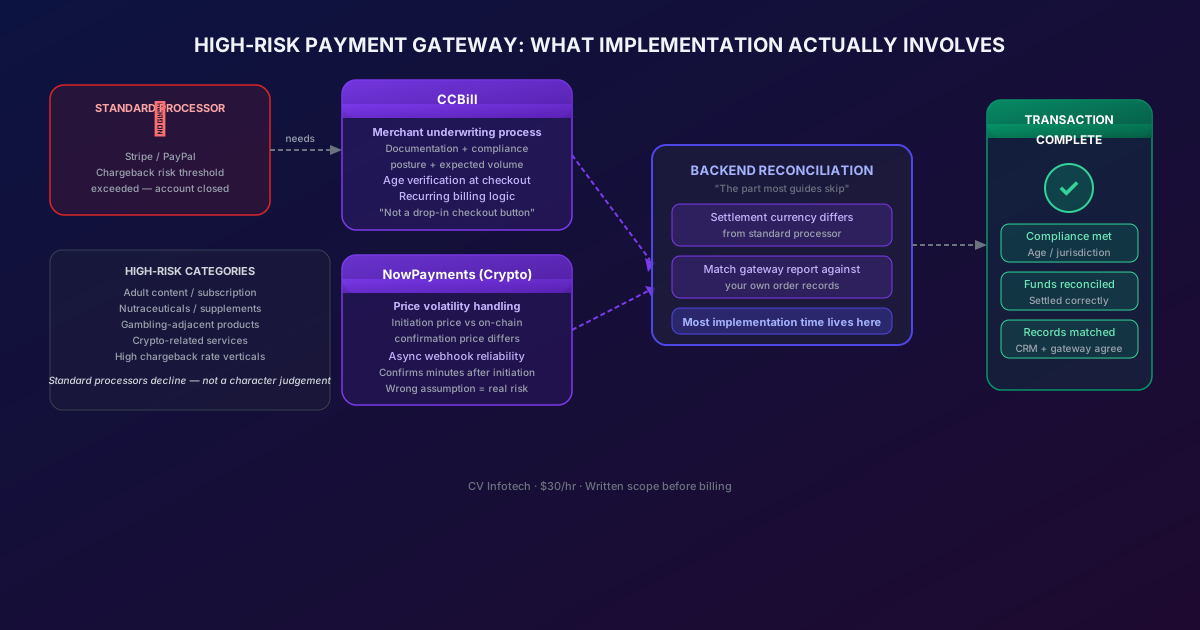
If your business operates in a category standard payment processors will not touch, implementing a gateway built for high-risk merchants is genuinely more involved than a standard Stripe integration. Most guides focus on which provider to choose. This covers what actually happens once a developer sits down to build it.
Why Standard Payment Processors Reject These Businesses
Chargeback rates and reputational risk
Standard processors like Stripe and PayPal set risk tolerances around chargeback rates and reputational exposure. Certain categories, adult content and crypto-adjacent services especially, statistically run higher chargeback rates and carry brand risk the processor is not willing to absorb, regardless of how well-run the individual business is.
Regulatory and compliance exposure
Some high-risk categories carry specific regulatory obligations, age verification, licensing requirements, jurisdiction restrictions, that a standard processor's compliance team simply is not built to underwrite. High-risk-specific processors like CCBill and NowPayments are built around handling exactly this compliance overhead. Stripe's own explainer on high-risk merchant accounts covers this risk classification in detail.
What CCBill Implementation Actually Involves
The integration is not a drop-in checkout button
Unlike a Stripe Checkout integration, which can be live in an afternoon, CCBill's integration typically requires a formal merchant approval process before any code goes live. Your business gets underwritten by CCBill directly, with documentation around your product, your compliance posture, and your expected transaction volume, before an API key even exists.
Recurring billing and age verification logic
A meaningful share of CCBill implementations involve subscription billing layered with age or identity verification at signup, which means the checkout flow itself needs to handle a compliance step most standard ecommerce checkouts never touch, and that verification step has to be genuinely reliable, not just present for appearances.
Working on a high-risk payment gateway integration project?
Written scope before billing. $30/hr. We tell you if we're not the right fit.
What NowPayments Implementation Actually Involves
Crypto payment flows work differently from card payments
NowPayments processes cryptocurrency payments, which means the integration has to handle price volatility between the moment a customer initiates a payment and the moment it confirms on-chain, a problem that simply does not exist in card-based payment flows and needs explicit handling in the checkout logic.
Webhook reliability matters more here, not less
Because crypto transactions confirm asynchronously, sometimes minutes after initiation, the integration leans heavily on webhook handling to know when a payment has actually cleared. Getting this wrong means either granting access before payment confirms, a real risk, or leaving paying customers stuck in limbo waiting for a status update that should have arrived instantly.
The Part Most Guides Skip: Backend Reconciliation
Both CCBill and NowPayments settle funds on a different schedule and in a different currency structure than a standard processor, which means your backend needs its own reconciliation logic, matching what the gateway reports against what your own order and subscription records show, rather than assuming a real-time match the way a Stripe integration typically allows. This reconciliation layer is where we have seen the most implementation time actually go, not the checkout UI itself. Razorpay's guide on high-risk merchant accounts covers the broader compliance context well.
The Reality of Building This In-House
Implementing a high-risk gateway correctly requires someone who understands both the specific processor's API quirks and the compliance requirements of your specific vertical, a combination most general web developers have not built expertise in, since it is a genuinely narrower specialty than standard ecommerce integration work.
Where We Fit
If you are comfortable with your current payment setup and it is working, you do not need us. Where we come in is for businesses in high-risk categories that need a gateway integration built correctly the first time, handling the underwriting process, the compliance logic, and the backend reconciliation properly rather than discovering the gaps after launch. That is specialised implementation work, $30 an hour, written scope before any billing starts.

Akash Singh
View full profileCTO and Co-Founder, CV Infotech · Gurugram, India
Akash has been building Websites, Web Apps, SaaS and Mobile Apps for clients in the USA, Europe, Australia, and Canada since 2012. He leads a 100% in-house team and personally manages every client relationship and technical decision. Francisco Escobar has worked with him since 2012. Steven has trusted the team with his AI platforms since 2019. 512 verified 5.0 reviews on Freelancer.com.