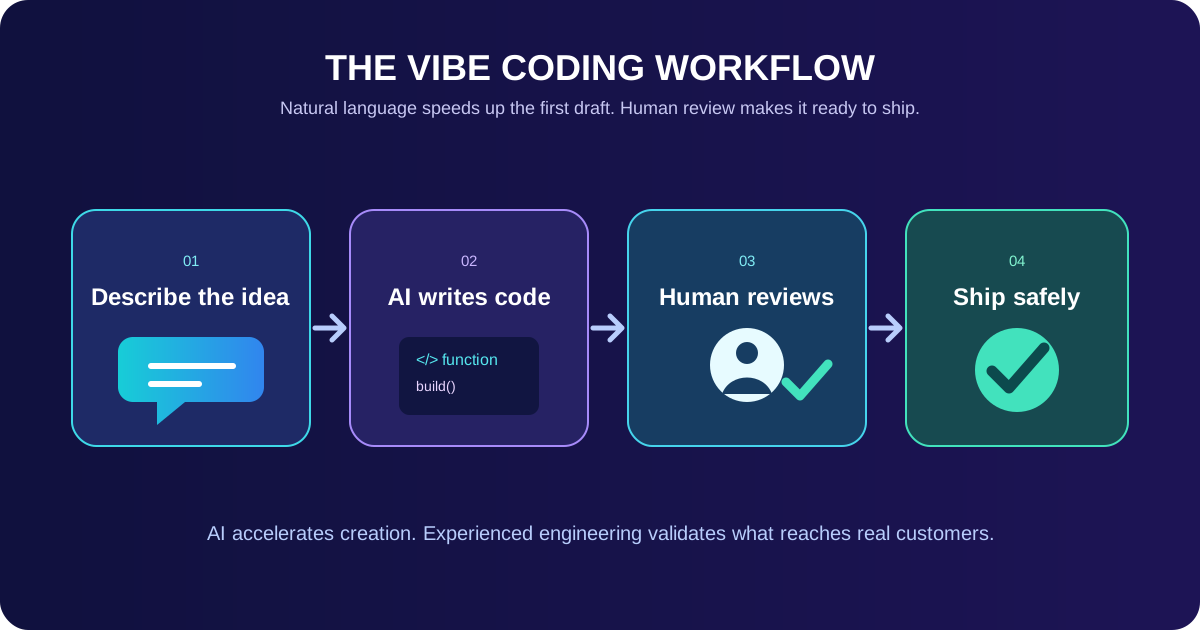
Vibe coding is building software by describing what you want in plain language and letting an AI model generate the actual code, rather than writing that code yourself line by line. Andrej Karpathy coined the term in early 2025, and it's since become one of the fastest-growing ways software actually gets built, Wikipedia, IBM, Microsoft, and JPMorgan have all published their own explainers on it, which tells you how quickly this went from niche jargon to something every business needs to understand. Wikipedia's entry on vibe coding covers the term's origin and definition.
Most explanations stop at the definition. What's actually useful to know, especially if you're a business owner deciding whether to build something this way, is what vibe coding is genuinely good at, where it breaks down, and what happens between "the AI generated something that works" and "this is safe to put in front of real customers." That gap is where most of the real risk and real value both live, and it's the part most explainers skip.
This post covers the definition briefly, then focuses on what matters more: how vibe coding actually gets used in production, not just in a demo.
The Definition, Briefly
What makes it different from traditional coding
Traditional coding means a developer writes code directly, understanding each line's purpose. Vibe coding means describing a goal in natural language and letting an AI model write the code, with the human acting more as a director and reviewer than an author. The term captures a real shift, from writing code to steering an AI that writes it.
What it isn't
Vibe coding isn't the same as general AI-assisted engineering, where a developer still writes and reviews code with AI suggestions helping along the way. Vibe coding specifically describes leaning further into AI-generated output with lighter human authorship of the underlying code itself, a distinction worth understanding since the two terms get used loosely and interchangeably online. MIT Technology Review's original explainer offers useful context.
Where Vibe Coding Is Genuinely Useful
Fast prototyping
Vibe coding's real strength is speed from idea to working demo. A founder can go from a concept to something clickable in hours rather than weeks, which is genuinely valuable for testing an idea before committing real budget to it.
Non-technical builders getting unstuck
For someone without a development background, vibe coding lowers the barrier to building something functional at all, which has real value for internal tools, personal projects, and early validation work that previously required hiring a developer just to test an idea.
Where It Breaks Down
The gap between "works in a demo" and "safe in production"
This is the part most explainers skip entirely. Code that runs correctly in a demo isn't the same as code that's been checked for security, edge cases, and how it behaves once real users and real data are involved. We've written in detail about the actual data behind this gap, including specific incidents, in our vibe coding security risks post, worth reading if you're past the prototype stage and considering scaling something.
Architectural drift as projects grow
Vibe-coded projects tend to accumulate inconsistent patterns as they grow, since each new prompt is generated somewhat independently of the last, without the architectural discipline a human engineer would apply across the whole codebase. This isn't a flaw unique to any one tool, it's a structural limitation of the approach itself once a project passes a certain size.
Working on a vibe coding security review and productionisation project?
Written scope before billing. $30/hr. We tell you if we're not the right fit.
What CV Infotech Actually Does With Vibe-Coded Projects
We use Cursor with Claude Sonnet as our own team's daily development tool, so we're not against AI-assisted coding, we use it constantly. Where we draw a hard line is between prototyping and production: every piece of AI-generated code that reaches a client's live environment goes through the same security and architecture review as code written entirely by hand. This is the exact discipline behind our vibe-coding-to-production service, taking what a tool like Cursor, Replit, or Bolt generated and making it genuinely production-ready.
The Build vs Buy Reality
The genuinely hard part of vibe coding was never the prompting, it's everything after the first working version: security review, removing hardcoded test data, proper error handling, and making sure the architecture holds up as real users start relying on it. Doing this well in-house means someone on the team needs to know specifically what to check for in AI-generated code, a different skill from writing secure code from scratch, and one most teams haven't built yet since the whole category is barely two years old.
Where We Fit
If you're using vibe coding to prototype an idea and you're not yet putting real users or real data through it, you don't need us for that stage, that's exactly what these tools are good at. Where we come in is the step after, reviewing, hardening, and preparing AI-generated code before it meets real customers, or building the kind of production-grade software from the start that a vibe-coding tool alone won't get you to.
That's the same discipline behind our vibe-coding-to-production work, $30 an hour, written scope before any billing starts. You can also read the related vibe coding security risks post.

Akash Singh
View full profileCTO and Co-Founder, CV Infotech · Gurugram, India
Akash has been building Websites, Web Apps, SaaS and Mobile Apps for clients in the USA, Europe, Australia, and Canada since 2012. He leads a 100% in-house team and personally manages every client relationship and technical decision. Francisco Escobar has worked with him since 2012. Steven has trusted the team with his AI platforms since 2019. 512 verified 5.0 reviews on Freelancer.com.