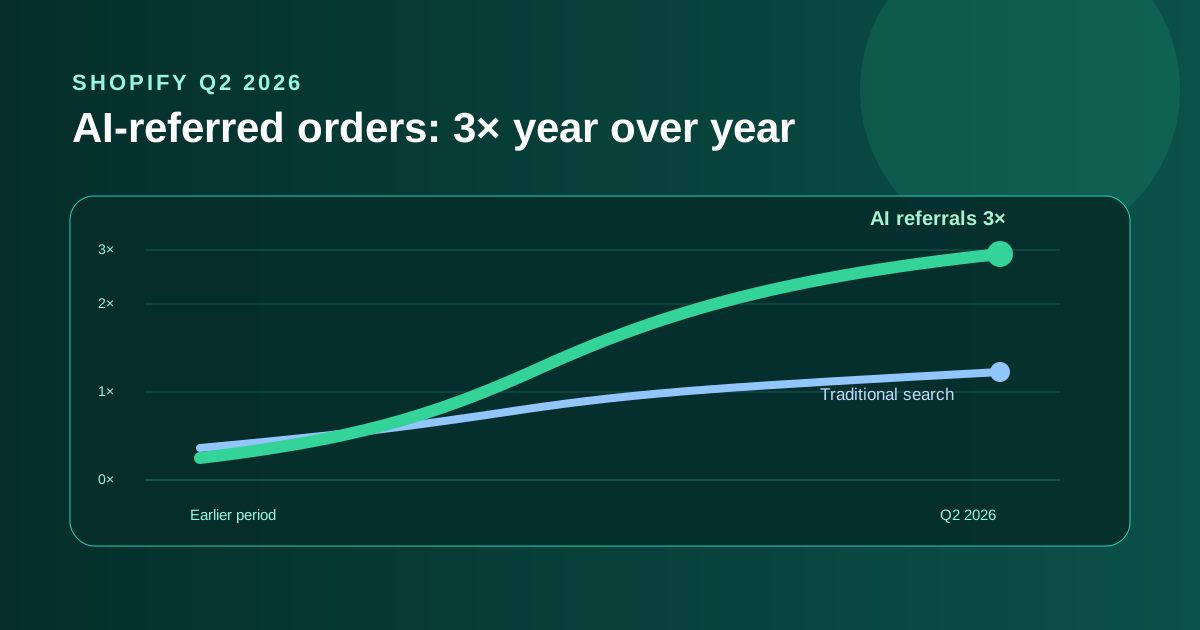
Shopify’s Q2 2026 earnings call supplied a data point that deserves more attention than another generic AI prediction: the company says AI-referred traffic and orders tripled year over year. The interesting part is not the number alone. It is where the growth is happening and why it looks different from the AI traffic story publishers are telling.
The Numbers Shopify Shared
On its August 5, 2026 earnings call, Shopify leadership said AI-driven traffic and orders tripled year over year, and linked part of the company’s earnings beat to that growth. TechCrunch’s earnings coverage framed the result as an early sign that AI shopping discovery is becoming a measurable sales channel.
Shopify’s own Q2 2026 financial results release is the primary source for the quarter’s reported performance. Store-level results will vary, but the company-wide direction is important: this is no longer only a feature announcement.
Why Ecommerce Is Different From Publishing
Many publishers are seeing AI answers satisfy an informational query before a person needs to click a source. Ecommerce has a different conversion path. An AI recommendation can help a shopper shortlist a product, but the person still needs to reach the merchant’s store, review the product, and complete checkout.
That makes AI discovery a potential complement to traditional search for stores rather than a direct replacement. It also explains why Shopify highlighted smaller merchants in the long tail as beneficiaries. A useful AI recommendation can introduce a buyer to a specific niche store they never knew to search for.
What This Says About UCP
In June 2026, Shopify enabled its Universal Commerce Protocol infrastructure by default, so AI shopping agents could read catalogues and build carts more consistently. Our earlier guide explains what that change meant operationally.
The Q2 result is the proof point the June announcement did not yet have: there appears to be meaningful demand behind the infrastructure. That does not mean every store needs a complex new AI project. It does mean merchants should stop treating product data quality as a back-office detail.
Working on a Shopify store optimisation project?
Written scope before billing. $30/hr. We tell you if we're not the right fit.
What Merchants Should Do Now
- Open the Agentic section in Shopify admin and look at the data for your own store.
- Check your most important products for clear names, accurate descriptions, variants, availability, and structured attributes.
- Review the store after any theme, feed, or catalogue integration change that could make product data inconsistent.
- Measure AI-referred activity separately from organic search and paid campaigns so a new signal does not get lost in a blended report.
For a merchant who has not reviewed the store since UCP shipped, this is a reasonable trigger to do it now.
What Not to Overreact To
Do not treat a company-wide growth figure as a guarantee for a specific store. Shopify has not published store-level evidence showing that one exact catalogue change causes a set lift in AI-referred orders. Do the fundamentals well, watch your own data, and avoid tooling purchases based on a headline alone.
The measured shift is real enough to justify attention. It is not an excuse to abandon ordinary ecommerce basics that still determine whether a visitor trusts the store enough to buy.

Akash Singh
View full profileCTO and Co-Founder, CV Infotech · Gurugram, India
Akash has been building Websites, Web Apps, SaaS and Mobile Apps for clients in the USA, Europe, Australia, and Canada since 2012. He leads a 100% in-house team and personally manages every client relationship and technical decision. Francisco Escobar has worked with him since 2012. Steven has trusted the team with his AI platforms since 2019. 512 verified 5.0 reviews on Freelancer.com.