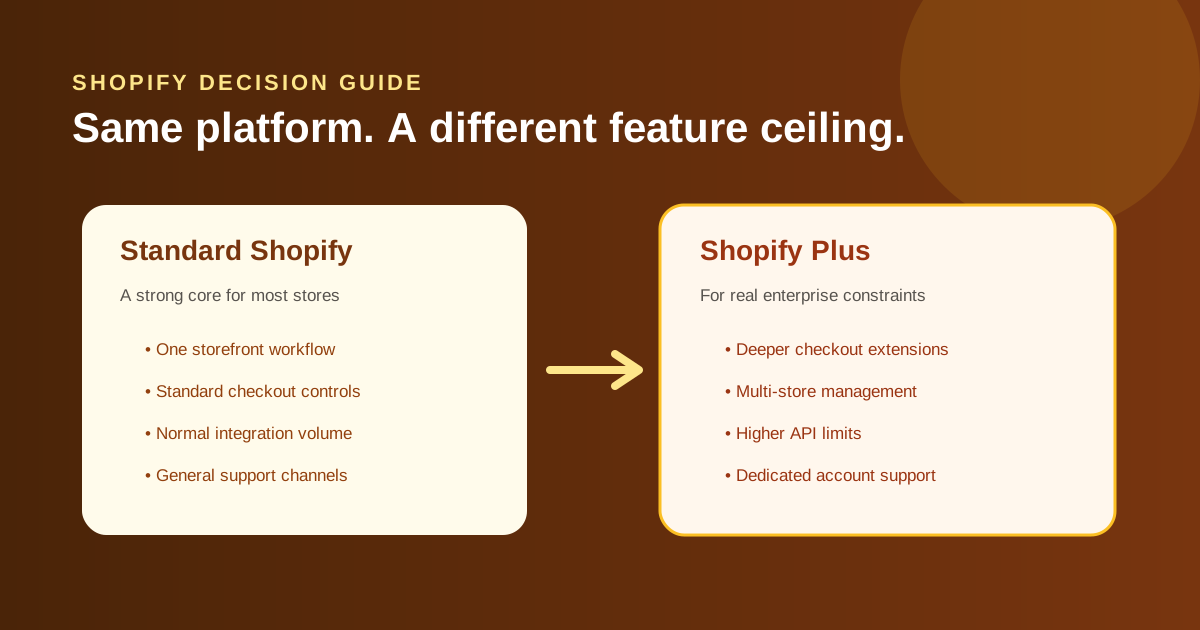
Shopify Plus is often presented as the inevitable next stage for any growing store. That makes a clean sales story, but it is not how a sensible upgrade decision should work. Standard Shopify and Shopify Plus run on the same platform. The question is whether you have reached a real feature ceiling, not whether you have reached a fashionable revenue figure.
Same Platform, Different Ceiling
Shopify Plus is not a replacement platform. Your existing theme, products, and most apps continue to live in the same Shopify ecosystem. Plus adds enterprise capabilities and support around the standard product rather than making you rebuild a store from scratch.
That is important because it changes the framing. The decision is not “do we need to migrate to an enterprise platform?” It is “are the missing Shopify capabilities now causing enough operational or commercial friction to justify a negotiated enterprise tier?”
What Shopify Plus Actually Adds
Shopify’s official Plus upgrade overview focuses on the features that matter most to larger operations:
- Deeper checkout customisation through Checkout Extensibility.
- Multi-store management for brands, regions, or separate selling strategies.
- Higher API limits for businesses with demanding integrations and automation.
- Dedicated account support for a more specialised support relationship.
A helpful independent feature comparison from Yotpo reaches the same central conclusion: Plus matters most when one of these practical differences is genuinely needed.
The Cost Question Is Not Just the Monthly Fee
Shopify Plus pricing is negotiated directly with Shopify and should be confirmed with them for your specific business. More importantly, enterprise features create implementation work. If you plan to use custom checkout extensions, multiple stores, or expanded integrations, budget for the design, development, testing, and future maintenance those capabilities require.
Paying more for Plus while using it like a standard Shopify plan is rarely a good deal. The value is in solving a constraint that standard Shopify cannot solve cleanly.
Working on a Shopify platform review project?
Written scope before billing. $30/hr. We tell you if we're not the right fit.
Real Signals It May Be Time to Upgrade
- Your checkout requirements go beyond the limited customisation available on standard Shopify.
- You need to manage multiple regional, brand, or wholesale storefronts as one operation.
- Your integrations repeatedly hit API limits that are disrupting real workflows.
- You need a dedicated support relationship because downtime or complex operational issues are materially expensive.
None of those signals is simply “we now make enough revenue.” Revenue can make the cost easier to absorb, but it does not create a technical need on its own.
When Staying on Standard Shopify Is the Better Decision
If your store has one main storefront, a normal checkout, manageable integrations, and no recurring API bottleneck, standard Shopify may still be the right home. You can invest the difference in product photography, conversion work, paid acquisition, content, or operational improvements that move the business more directly.
The honest recommendation is not always an upgrade. It is the plan that removes your real constraint at the lowest sensible level of complexity.

Akash Singh
View full profileCTO and Co-Founder, CV Infotech · Gurugram, India
Akash has been building Websites, Web Apps, SaaS and Mobile Apps for clients in the USA, Europe, Australia, and Canada since 2012. He leads a 100% in-house team and personally manages every client relationship and technical decision. Francisco Escobar has worked with him since 2012. Steven has trusted the team with his AI platforms since 2019. 512 verified 5.0 reviews on Freelancer.com.